
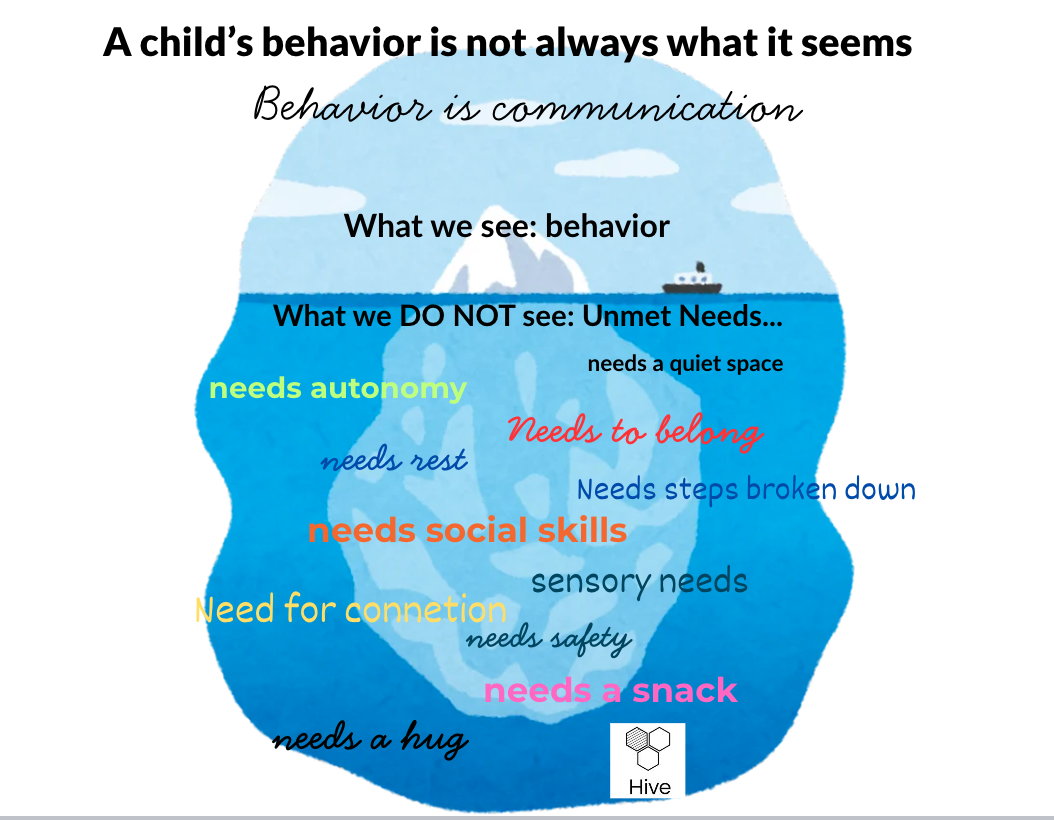
Oftentimes with young children, simple requests can turn into power struggles. When your child refuses to put on their shoes, brush their teeth, or clean up their toys, it is easy to see this as disobedience. However, if we view behavior as communicating a message rather than something we need to stop, we can respond to what is happening beneath the surface.
Children often lack the developmental capacity to express complex feelings such as overwhelm or frustration in words. Instead, they shout, run away, or physically act out. When your child struggles, it’s important to get curious rather than frustrated. You may need to take some deep breaths for yourself first, to help you find your calm in these heightened moments. When we are in a calm state of mind, then we can try and understand the root cause of their behavior. Ask yourself: Are they tired or hungry? Do they need connection and my attention right now? Are they overstimulated and frustrated? Understanding the root cause gives you the information needed to help, not just stop the behavior.
What looks like defiance is often a lack of skill or capacity. A child who melts down during transitions may simply be unable to manage the pace of the routine. Our job is to help them develop these skills while maintaining loving and firm boundaries. Validating a feeling doesn't mean permitting the behavior—it means teaching a better way to respond once the child is calm. We are still holding the expectation through clear, kind, and firm boundaries, such as, “I understand you are angry, but I will not let you hit. I am here to help you. We will figure this out together.”
Here are some helpful tips and strategies to keep in mind:
They are not trying to give you a hard time - They are having a hard time. It is easy for defiant behavior to “trigger” our own emotions. Tap into your tools to stay calm and regulated; try not to take it personally.
Connection before correction: Get low, go slow, and soften your voice. Validate their feelings before trying to teach or lecture. Co-regulate with them until the big emotions have passed. A calm brain is a learning brain.
Look for patterns: Note if behaviors happen at certain times or in specific environments. Making changes in the environment or shifts in routine, before the behavior occurs, is often an effective strategy.
Focus on skill-building: Ask yourself, “What skill does my child need to learn?” Whether it's waiting, naming emotions, or asking for help, these are skills that require explicit teaching, practice and repetition.
By listening to the message beneath the behavior, we move toward connection, understanding, and growth. Our goal is to raise children who understand themselves, communicate their needs, and make thoughtful choices.
Parenting is a journey - We are here to support you!